Data Contracts
Learn what data contracts are and why they matter for data quality and reliability
What Are Data Contracts?
Data Contracts are a set of guidelines that ensure data consistency, quality and governance across data pipelines. They help with schema enforcement, data validation, versioning and lineage, providing a robust framework for managing the flow of data across complex data pipelines.
By using these contracts, organizations can ensure that data remains accurate and reliable supporting trustworthy analytics and decision-making. Data contracts follow OpenAPI and AsyncAPI conventions.
To simplify it, Data contracts are formal agreements that define and enforce data schemas between producers and consumers.
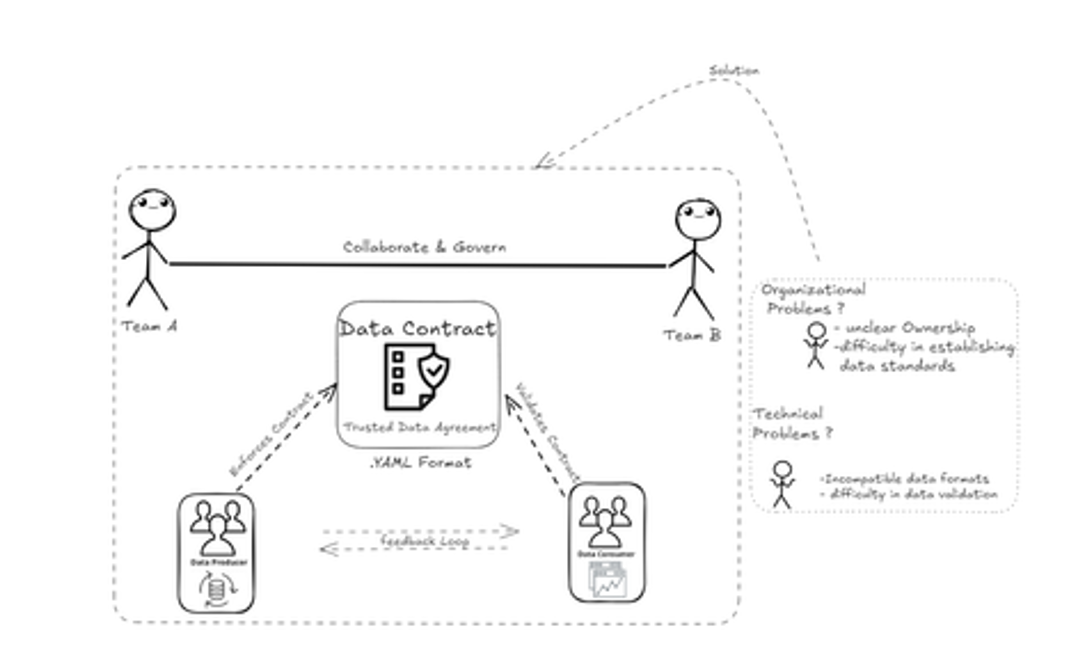
Data contracts specify:
- Schema: The structure and types of data fields
- Format: How data is serialized (JSON, Avro, Protobuf, etc.)
- Constraints: Validation rules and business logic
- Versioning: How schema changes are managed
- Compatibility: Rules for backward and forward compatibility
Components of Data Contract
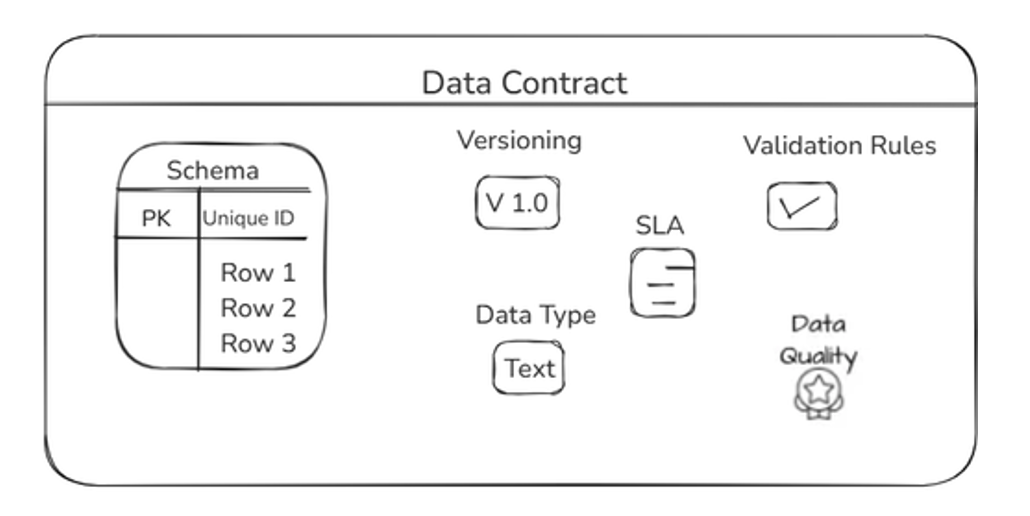
A comprehensive data contract includes several key components:
Schema/Models: Set of rules and constraints placed on data attributes and/or columns of structured dataset in JSON, Avro format. They include constraints to ensure data correctness.
Versioning: The version of the contract to include backward and forward compatibility.
Service Level Agreements (SLAs): SLAs are commitments about the availability and freshness of data in a data product.
Metadata: Data governance specifications in a data contract help you understand security and privacy restrictions and check whether your data products are in compliance.
Data Quality Rules: Metrics for data quality, such as row counts and missing data statistics.
Examples: Sample data sets to illustrate the structure and content.
Why Data Contracts Matter
Data contracts help standardize data interactions, ensuring that data is structured, shared and used consistently across various systems and organizations. A well-implemented contract guarantees:
Key Benefits
1. Data Quality and Error Prevention: A data contract ensures that the data is structured, validated and adheres to a set of expectations across different stages of data processing, making it possible to detect issues early before they lead to failures in real-world operations.
2. Data Accuracy and Reliability: Data contracts ensure the accuracy, reliability, and fairness of information by clearly defining the structure, format, and specifications of the data being exchanged. This includes ensuring that data such as scores, player statistics, and odds are consistent and up-to-date.
3. Versioning and Schema Enforcement: Maintaining versioning information in your data contracts helps systems handle different versions of the data appropriately and this helps with forward and backward compatibility. Backward compatibility ensures that newer versions of a system can still interact with and process data that was created by older versions. This is crucial when a system evolves over time. Adding new fields become seamless due to this feature. Forward compatibility ensures that older versions of a system can work with data created by newer versions.
4. Integration Between Teams: Data contracts allow different teams (e.g., data engineers, data scientists, and analysts) to have a shared understanding of the data’s structure and quality. By adhering to a contract, teams can build, consume, and rely on the data without ambiguity about its structure or expectations.
5. Data Governance: In a large organization, managing data contracts helps maintain governance by specifying rules for data quality, validation, access controls, and security.
6. Enabling Automation and AI: Many platforms rely on automated systems and AI to calculate odds, predict outcomes, and settle bets in real time. A data contract ensures that the systems receive consistent, structured data in a way that is easy to process, enabling these automated systems to function correctly and efficiently.
Data Contract Features
- Interoperability: Systems can seamlessly exchange and utilize data.
- Data Integrity: Data remains accurate and consistent throughout its lifecycle.
- Collaboration: Teams can work together effectively with a shared understanding.
- Scalability: The data ecosystem can adapt to growing data volumes and complexity.
- Documentation: Clear documentation ensures understandability and maintainability.
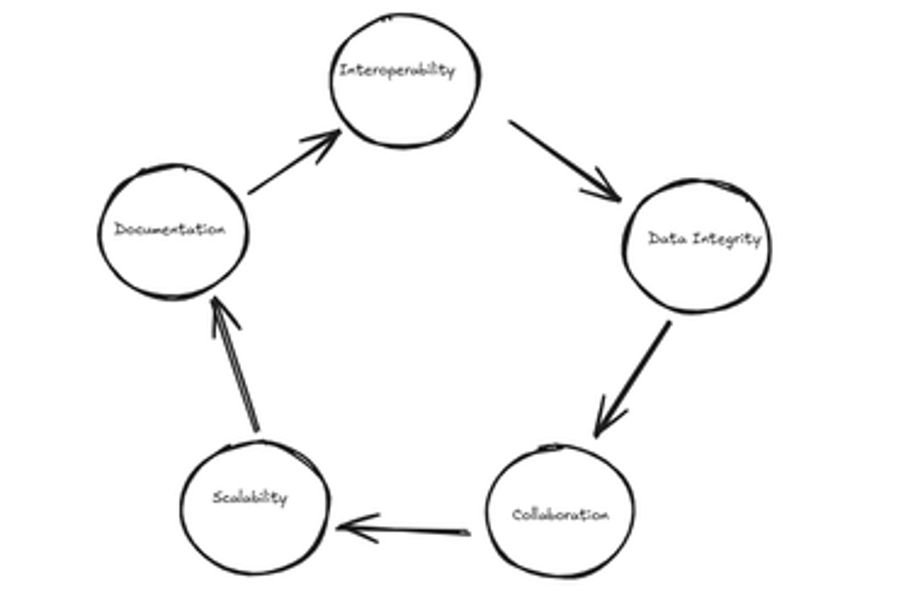
By addressing these aspects, data contracts ensure a robust and reliable data ecosystem.
What Happens If We Don’t Have a Data Contract?
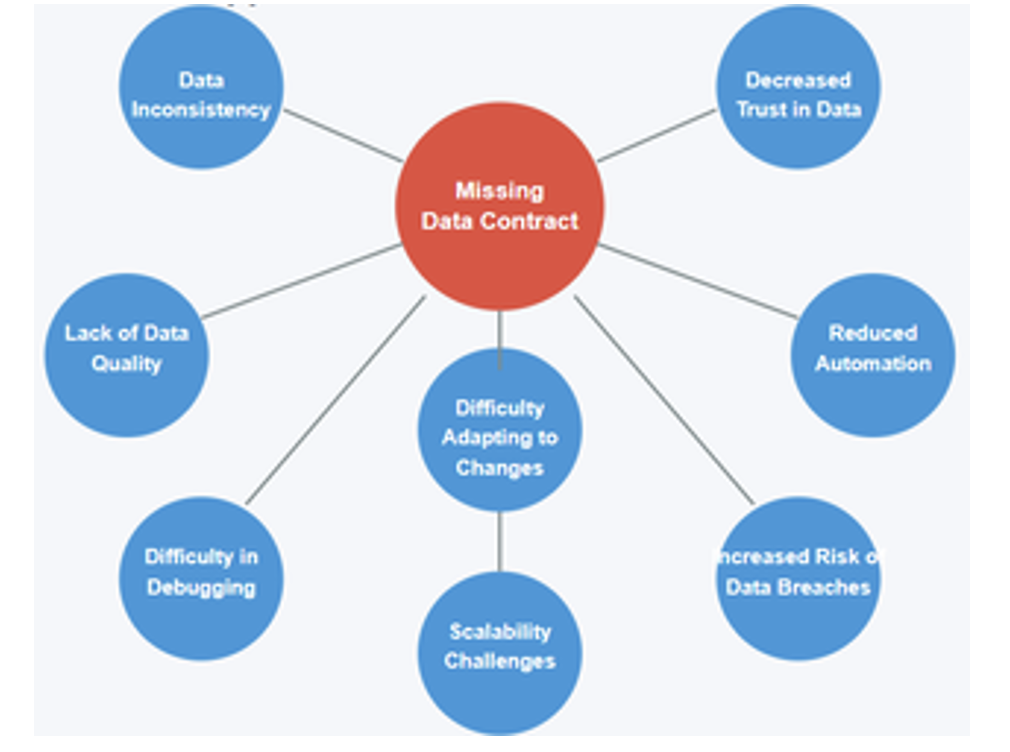
Not having a data contract in place leads to several drawbacks:
Data Inconsistency: Occurs when data is not uniform or contradictory across different systems or sources, leading to errors or discrepancies.
Lack of Data Quality Assurance: The absence of systematic checks to ensure that data is accurate, complete, and reliable.
Difficulty in Debugging: Challenges in identifying, analyzing, and fixing issues within software or systems due to complex code or insufficient documentation.
Scalability Challenges: The difficulty in expanding or adapting systems, processes, or infrastructure to handle increased demands or growth.
Increased Risk of Data Breaches: Higher likelihood of unauthorized access or theft of sensitive data, often due to weak security measures or vulnerabilities.
Reduced Automation and Integration: Limited ability to streamline processes or connect systems, leading to manual work and inefficiencies.
Decreased Trust in Data: Loss of confidence in the accuracy, reliability, or validity of data, often caused by inconsistencies or poor quality.
Difficulty in Adapting to Changes: Challenges faced by organizations or systems when responding to new requirements, technologies, or environments due to rigid structures or outdated practices.
Best Practices for Data Contracts
When implementing data contracts, follow these best practices:
Use Default Values: When new fields are added, make sure that they have default values or that the system can handle missing data gracefully.
Avoid Breaking Changes: Do not remove or modify the existing structure in a way that would cause older systems to fail.
Implement Versioning: Consider including version information in your data contracts so that systems can handle different versions of the data appropriately.
Standardize Data Formats: Create consistent naming conventions. Define standard data types and constraints.
Implement Automated Validation: Create automated tests for data quality and implement schema validation at integration points.
By following these principles, you ensure that your data contracts can handle both the evolution of the system and the need for compatibility with both newer and older versions of clients or services.
How Data Contracts Work
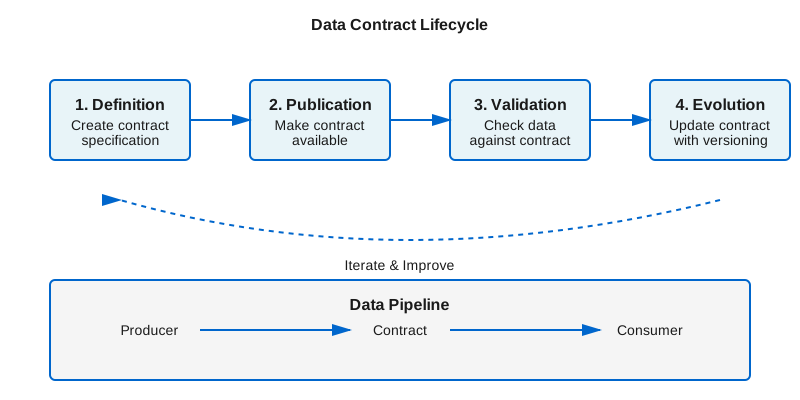
The data contract lifecycle typically involves:
- Definition: Creating the contract specification
- Publication: Making the contract available to consumers
- Validation: Checking data against the contract
- Evolution: Updating contracts with versioning
Next Steps
- Learn about the Open Data Contract Standard (ODCS) - a comprehensive framework for data contracts
- Explore different data schema types and their benefits
- Check out our tools for working with data contracts
- Read more about what data contracts are in detail
- What Are Data Contracts?
A comprehensive introduction to data contracts and their role in modern data systems