Data Schemas
Understanding different types of data schemas and their benefits
What Are Data Schemas?
Data schemas define the structure, types, and constraints of data. They serve as blueprints that describe how data is organized and what rules it must follow.
Types of Data Schemas
Structural Schemas
Structural schemas define the organization of data:
- Relational Schemas: Tables, columns, relationships (SQL databases)
- Document Schemas: Nested objects and arrays (JSON, MongoDB)
- Graph Schemas: Nodes, edges, properties (graph databases)
- Columnar Schemas: Columns and data types (Parquet, columnar databases)
Format Schemas
Format schemas specify serialization:
- JSON Schema: Structure and validation for JSON data
- Avro Schema: Binary format with schema evolution
- Protobuf: Efficient binary serialization
- XML Schema: Structure for XML documents
Validation Schemas
Validation schemas add business rules:
- Constraints: Required fields, value ranges, formats
- Relationships: Foreign keys, references
- Business Rules: Custom validation logic
- Data Quality Rules: Completeness, accuracy, consistency
Benefits of Different Schema Types
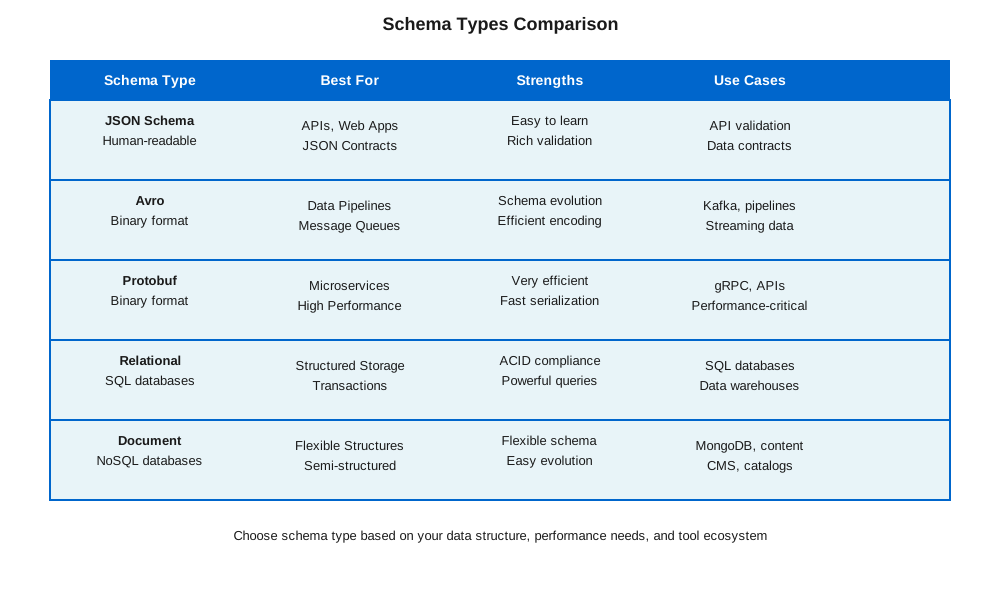
Structural Schemas
Benefits:
- Clear data organization
- Efficient storage and retrieval
- Strong typing and validation
- Query optimization
Use Cases: Databases, data warehouses, structured data storage
Format Schemas
Benefits:
- Standardized serialization
- Cross-platform compatibility
- Efficient encoding
- Schema evolution support
Use Cases: Data exchange, APIs, message queues, data pipelines
Validation Schemas
Benefits:
- Data quality assurance
- Early error detection
- Business rule enforcement
- Documentation of expectations
Use Cases: Data contracts, API validation, data quality checks
Choosing the Right Schema Type
The best schema type depends on your use case:
- Structured Data Storage: Use structural schemas (relational, document)
- Data Exchange: Use format schemas (JSON Schema, Avro, Protobuf)
- Data Quality: Use validation schemas (constraints, business rules)
- Complex Requirements: Combine multiple schema types
Schema Evolution
As your data needs change, schemas must evolve. Key considerations:
- Backward Compatibility: Can old data still be read?
- Forward Compatibility: Can new data be processed by old systems?
- Versioning: How to manage schema versions
- Migration: How to handle schema changes
Learn More
- Data Contracts - How schemas fit into data contracts
- ODCS - Standardized approach to schema definition
- Schema Types Details - In-depth comparison of schema types and data modeling styles
- Schema Types and Benefits
Detailed comparison of different data schema types and when to use each